
How Long Do Mattresses Last?
Updated: Dec 11, 2025
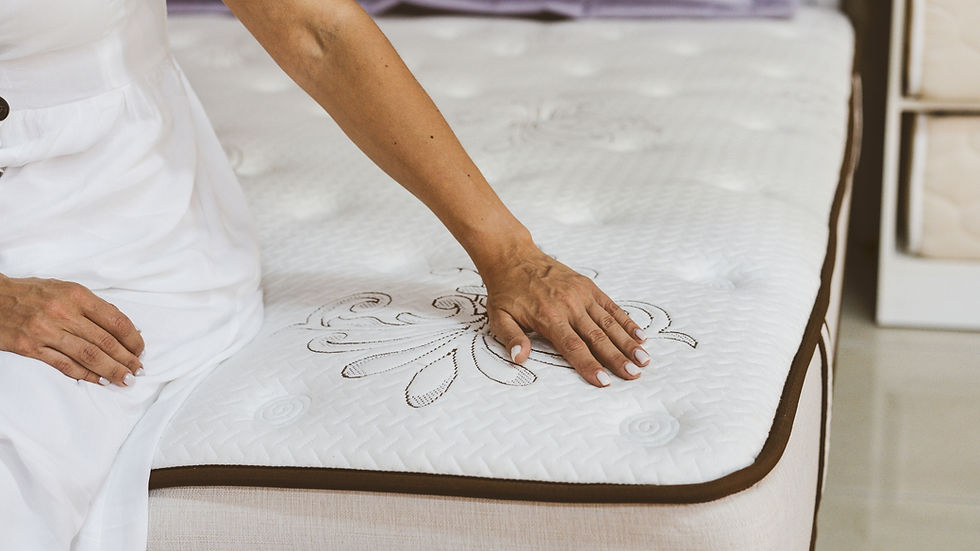
Buying a mattress is a big investment, and most people want it to last for years. But over time, even the comfiest bed can start to sag, lose support, or stop feeling as restful as it once did. Knowing how long a mattress lasts can help you plan for replacements and avoid waking up sore or restless.
In this blog, we’ll break down the lifespans of different mattress types and the factors that affect their durability. You’ll learn the signs it’s time to replace your bed and how to get the most life out of your mattress without sacrificing comfort or support.
How Long Does a Mattress Usually Last?
Most mattresses last around 7 to 10 years, but how long they actually last can vary. Factors like the mattress quality, materials, and even your weight and sleep habits all play a role in how long it stays comfortable and supportive.
Mattresses don’t come with an exact “expiration date,” so it’s up to you to know when it’s time for a new one. Over time, we may get used to a worn-out bed without realizing it. Since a good mattress is key to better sleep, replacing it when needed is always worth the investment.
Average Lifespan by Mattress Type
Innerspring/Coil Mattresses
Innerspring mattresses typically last 5–8 years. Over time, the coils may sag, especially in areas that bear the most weight. This can lead to uneven support and discomfort, making it harder to get a good night’s sleep.
Memory Foam Mattresses
Memory foam usually lasts 7–10 years. While it contours to your body and relieves pressure points, it can develop body impressions and lose some bounce over time. Choosing higher-density foam helps extend the lifespan.
Latex Mattresses
Latex mattresses are the champions of durability, lasting 10–20 years. Natural Talalay latex maintains its shape and support for years. It resists sagging, body impressions, and allergens, making it a smart long-term investment for quality sleep.
Hybrid Mattresses
Hybrid mattresses, which combine foam and innerspring coils, generally last 7–10 years. Their longevity depends on the quality of the foam layers and coils. Higher-quality components tend to increase lifespan, while lower-quality hybrids may wear faster.
Comparison Table
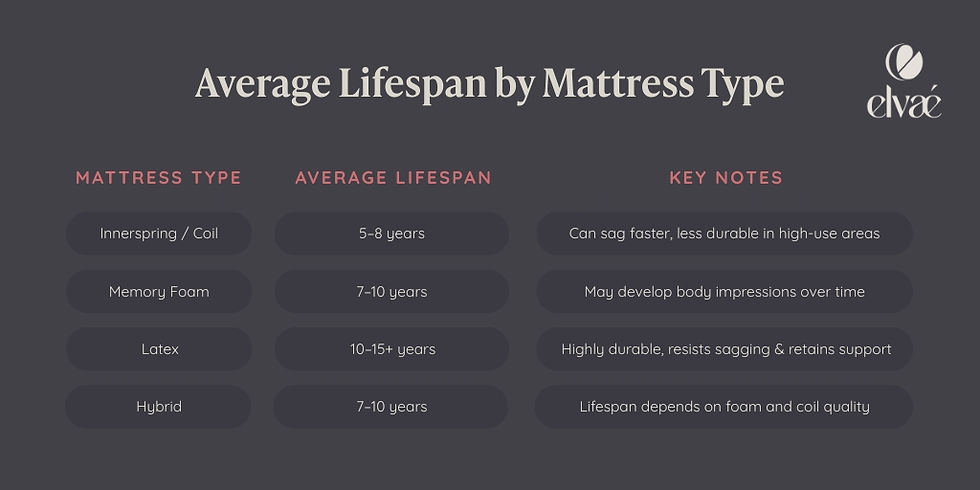
Mattress Type | Average Lifespan | Key Notes |
Innerspring / Coil | 5–8 years | Can sag faster, less durable in high-use areas |
Memory Foam | 7–10 years | May develop body impressions over time |
Latex | 10–15+ years | Highly durable, resists sagging and retains support |
Hybrid | 7–10 years | Lifespan depends on foam and coil quality |
Which Mattress Lasts the Longest?
If longevity is your top priority, latex mattresses are the clear winner. Natural Talalay latex keeps its shape and support for more than a decade, far outlasting most foam or coil options.
One of the main benefits of a latex mattress is its natural resilience. It bounces back instead of sagging under weight. It also resists dust, allergens, and body impressions. With proper care, like rotating it occasionally, using a supportive base, and protecting it from spills, a latex mattress can provide consistent comfort for many years.
Factors That Affect Mattress Longevity

Material Quality
Higher-density foam and natural latex last longer than lower-quality alternatives. Choosing premium materials helps prevent sagging and body impressions.
Usage and Weight
Heavier sleepers or multiple users may compress a mattress faster, shortening its lifespan. Even lightweight sleepers can reduce wear by using the mattress properly.
Sleeping Habits
Frequent movement, sleeping in the same spot every night, or sharing your bed with pets can add stress and reduce durability over time.
Maintenance
Rotating or flipping the mattress as recommended keeps wear even. Using a strong, supportive foundation prevents sagging. Regular cleaning keeps it fresh without damaging the materials.
Signs It’s Time to Replace Your Mattress

Sagging or Lumps: Noticeable dips or uneven areas mean your mattress is losing support.
Increased Discomfort or Pain: Waking up sore or with back pain can indicate your mattress isn’t providing proper support.
Noisy Springs or Broken Coils: If your innerspring mattress squeaks or coils break, it’s time for a replacement.
Allergies or Dust Accumulation: Old mattresses can harbor allergens that affect your health and sleep quality.
Decline in Sleep Quality: Even with the same routine, poor sleep may signal that your mattress is worn out.
Final Thoughts
Mattress lifespan depends on type, material, and care. While innerspring, memory foam, and hybrid beds have moderate lifespans, latex mattresses last the longest, providing years of consistent comfort and support. Choosing a high-quality latex mattress and maintaining it properly ensures you get the most value and better sleep for many years.
FAQs
How does a latex mattress compare to memory foam for long-term durability?
Latex generally lasts longer because it naturally bounces back and resists body impressions. Memory foam can soften and form permanent dips over time, especially if it’s lower density.
How often should I rotate or flip my mattress?
It depends on the type. Many mattresses benefit from rotation every 3–6 months. Latex usually doesn’t need flipping, but occasional rotation still helps even out pressure.
Do heavier people need to replace mattresses more often?
Heavier sleepers can compress materials faster, so their mattress might wear out sooner. Choosing a durable option like latex and using proper support can reduce the difference.
How do I know if my mattress is too old?
Look for sagging, lumps, or discomfort. If your sleep quality has declined despite your usual routine, it may be time to replace it.


Comments